Polish words that stay in your memory
Spaced repetition: difficult words come back more often, well-learned ones less often. 2,400+ words, 7,000+ examples, real voices, study without a connection.
Runs right in your browser. Nothing to install.
Apps for Android, iPhone and Mac — coming soon.
What's inside
Spaced repetition
Difficult words come back more often, well-learned ones less often. The repetition schedule adapts to you.
2,400+ words and 7,000+ examples
Every word sits in a real phrase, not in a vacuum — you see how it actually works in speech.
Real voices
A male and a female voice, so a word is recognised by ear and not only by eye. You can listen before you buy.
It does not nitpick
Mixed up ą and a, or missed a key? The app tells you that you were close instead of simply marking it wrong.
You choose how hard it is
Want it easier? Pick the answer from a list. Want a real challenge? Type the word yourself.
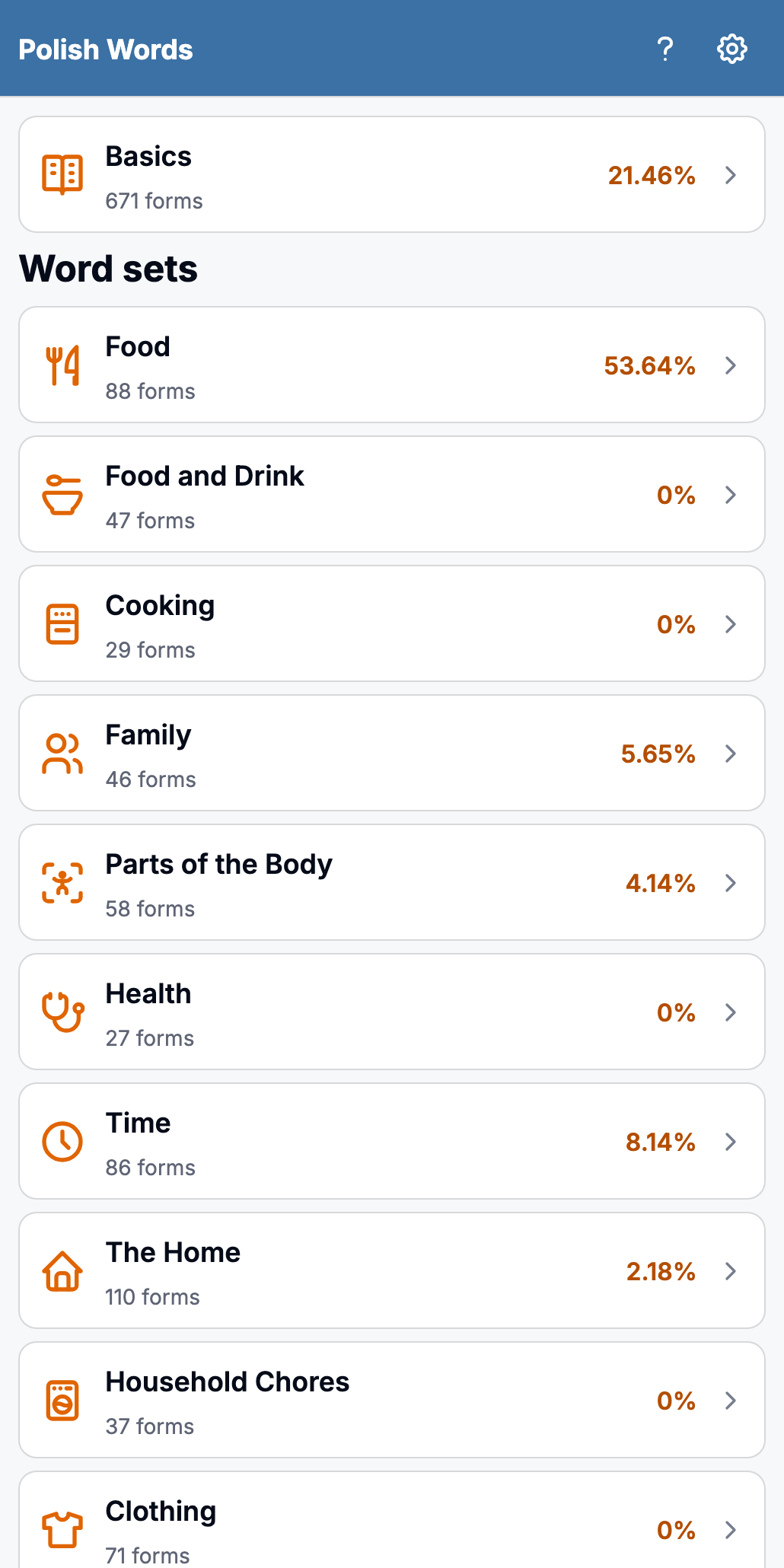
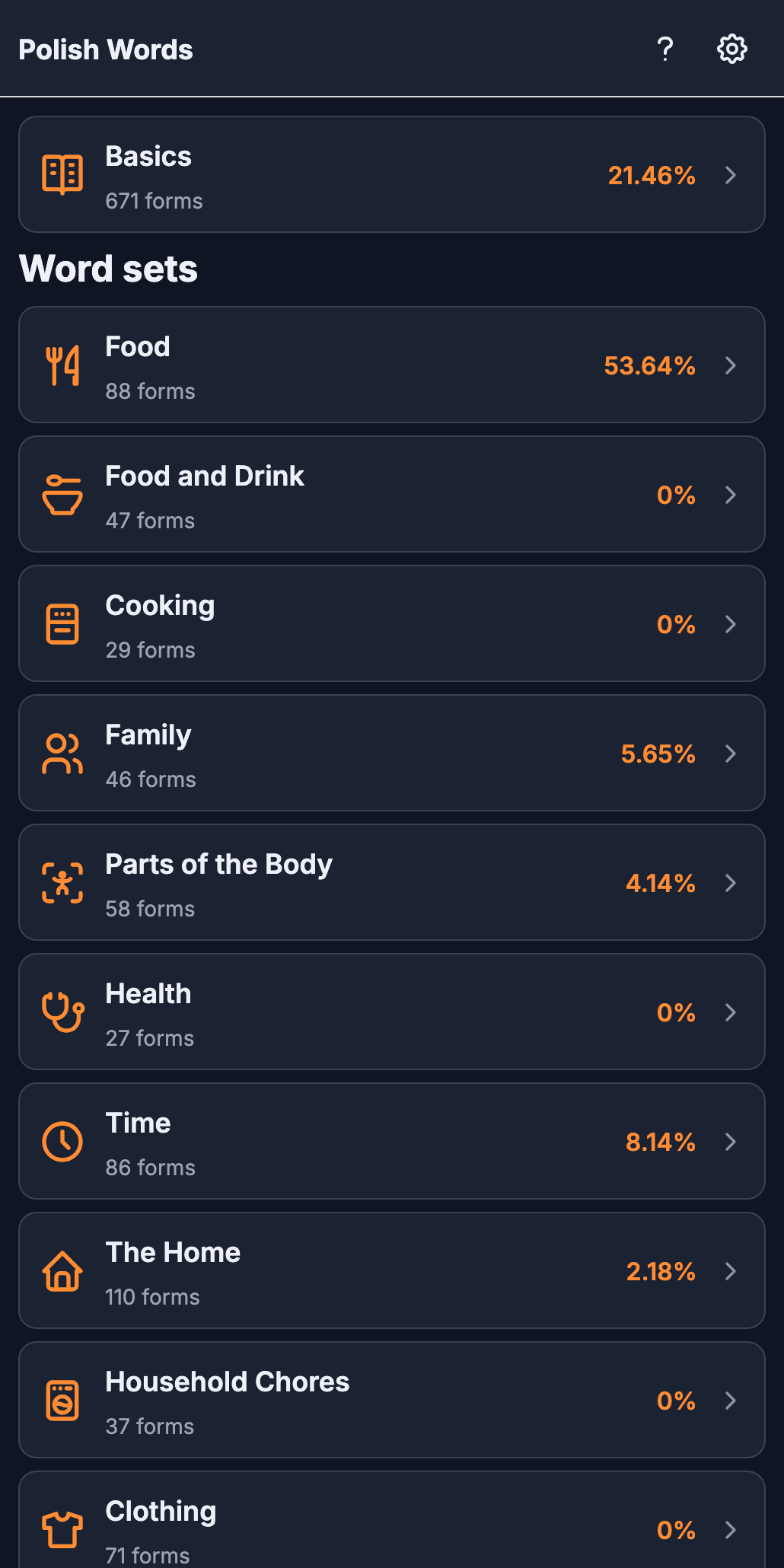
Themed sets
Food, home, work, transport, health, travel. You can also build your own set from the words you need.
Study without a connection
The dictionary, the examples and your progress are always with you. Your device voice speaks anywhere, and the real voices are kept once you have played them.
Your progress will not vanish
Changing phones? Save your progress to a file and carry it over. No accounts, no clouds.
Vocabulary size
How many words do you need to understand Polish comfortably?
There is no exact number. CEFR levels describe what someone can do in a language, not how many words they remember, and published estimates differ several times over depending on which test was used and who was measured. So the scale below shows the order of things rather than thresholds: each level needs a noticeably larger vocabulary than the one before it.
Vocabulary is easiest to count in lemmas — dictionary forms, where speak, speaks and spoke are one word rather than three. For languages with rich inflection that is the only honest unit: counting word forms multiplies the number without saying anything about knowledge.
- a1Simple phrases about yourself and daily life
- a2Everyday situations: shops, transport, the doctor
- b1Unprepared conversation on familiar topics
- b2Fluent talk, news and work topics
- c1Complex texts and shades of meaning
- c2Practically everything you hear and read
Word lists by topic
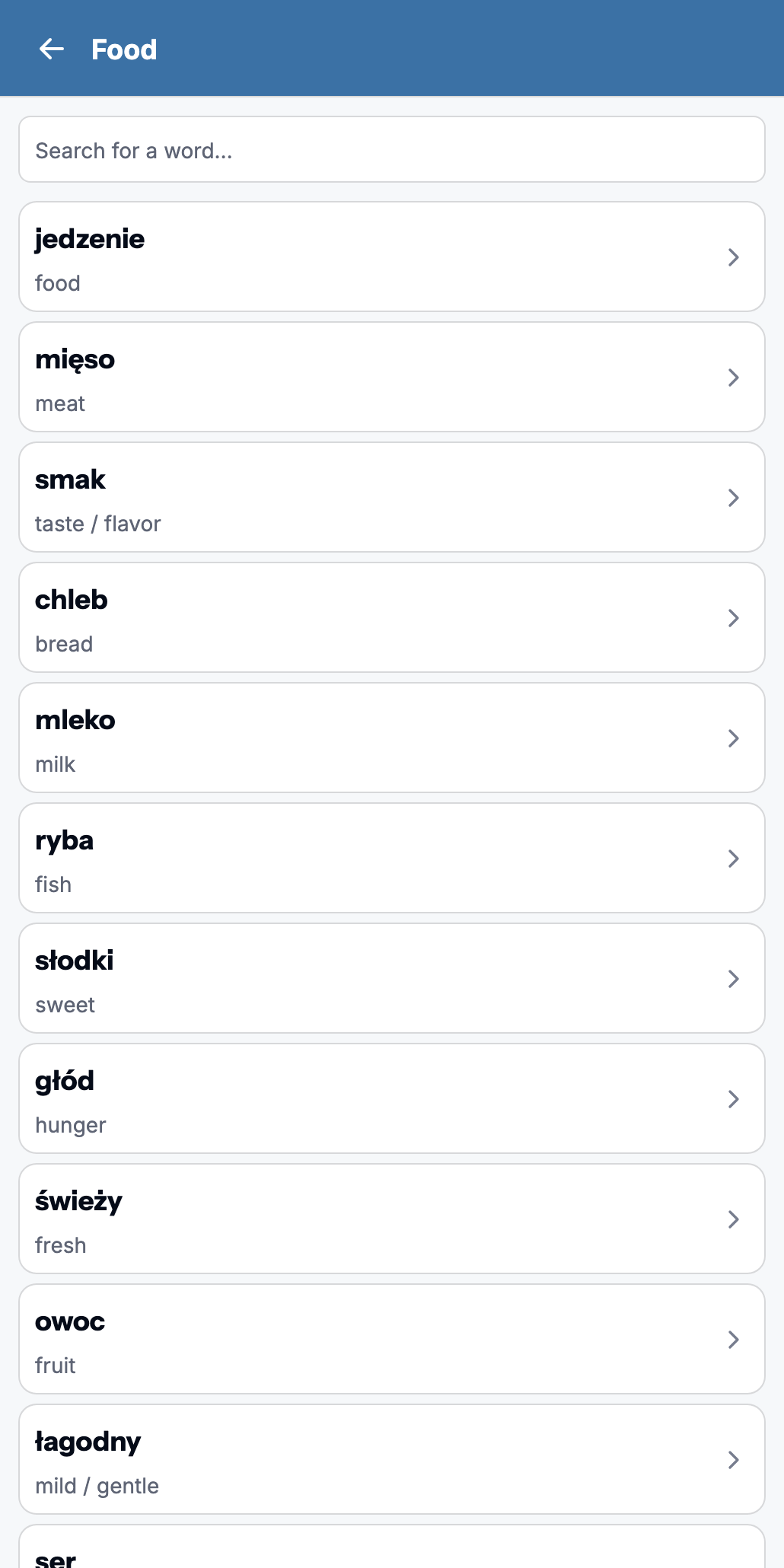
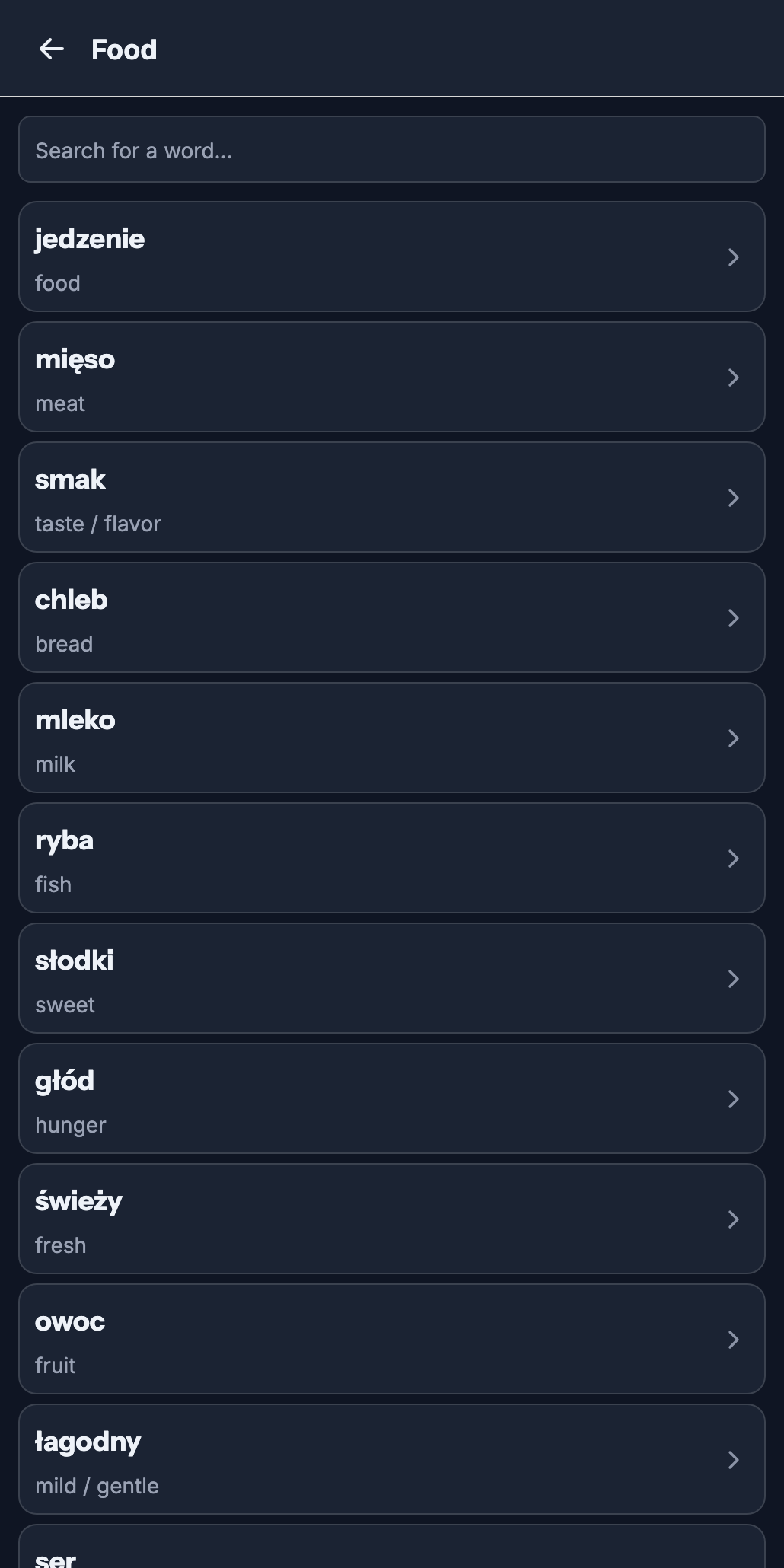
You can look at the words right now, without installing anything: a translation and an example sentence for each one.
How a lesson goes
Three simple steps — nothing superfluous.
1. A word or phrase with audio
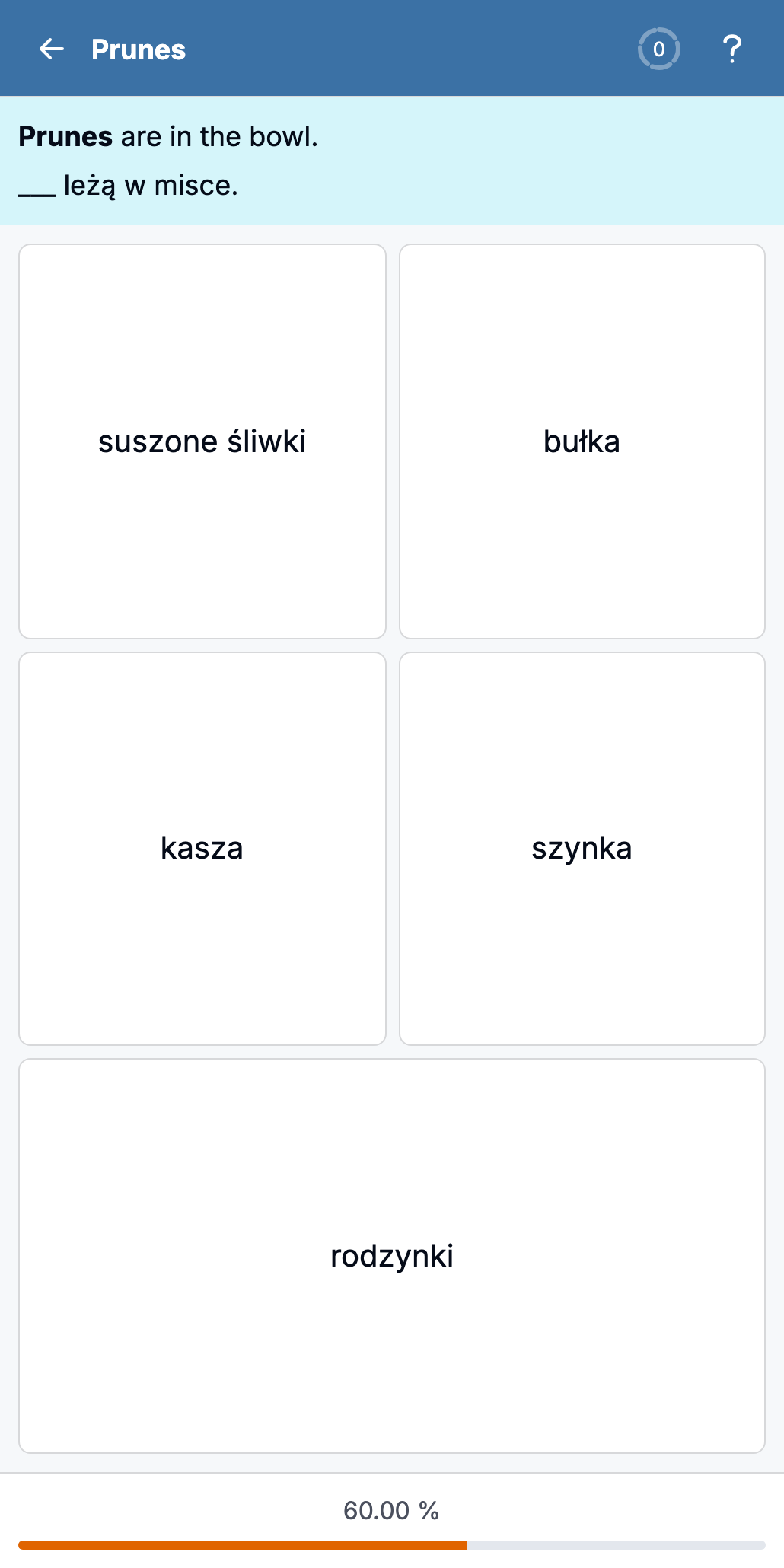
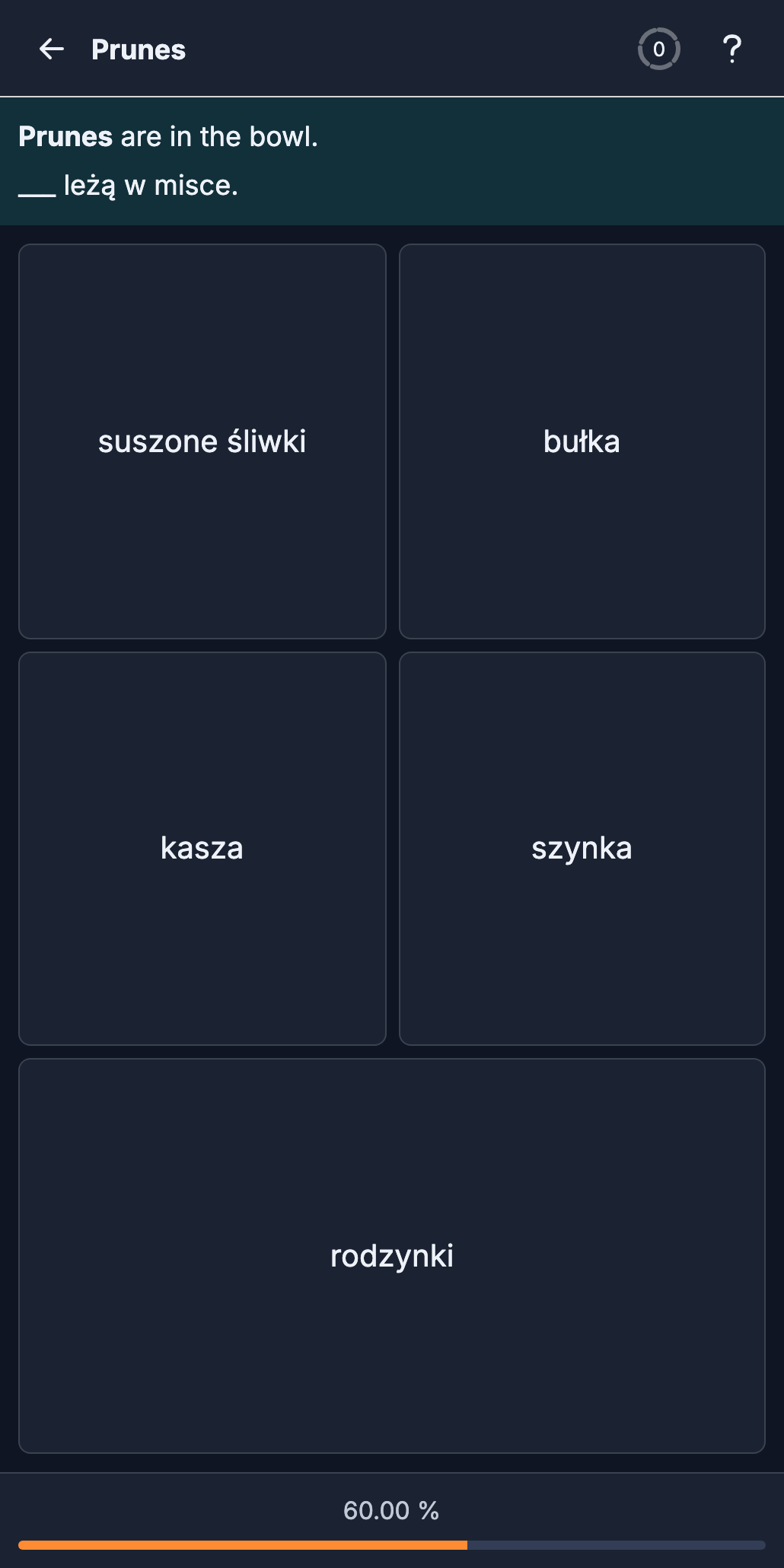
The app shows a card with a Polish word or phrase inside an example sentence.
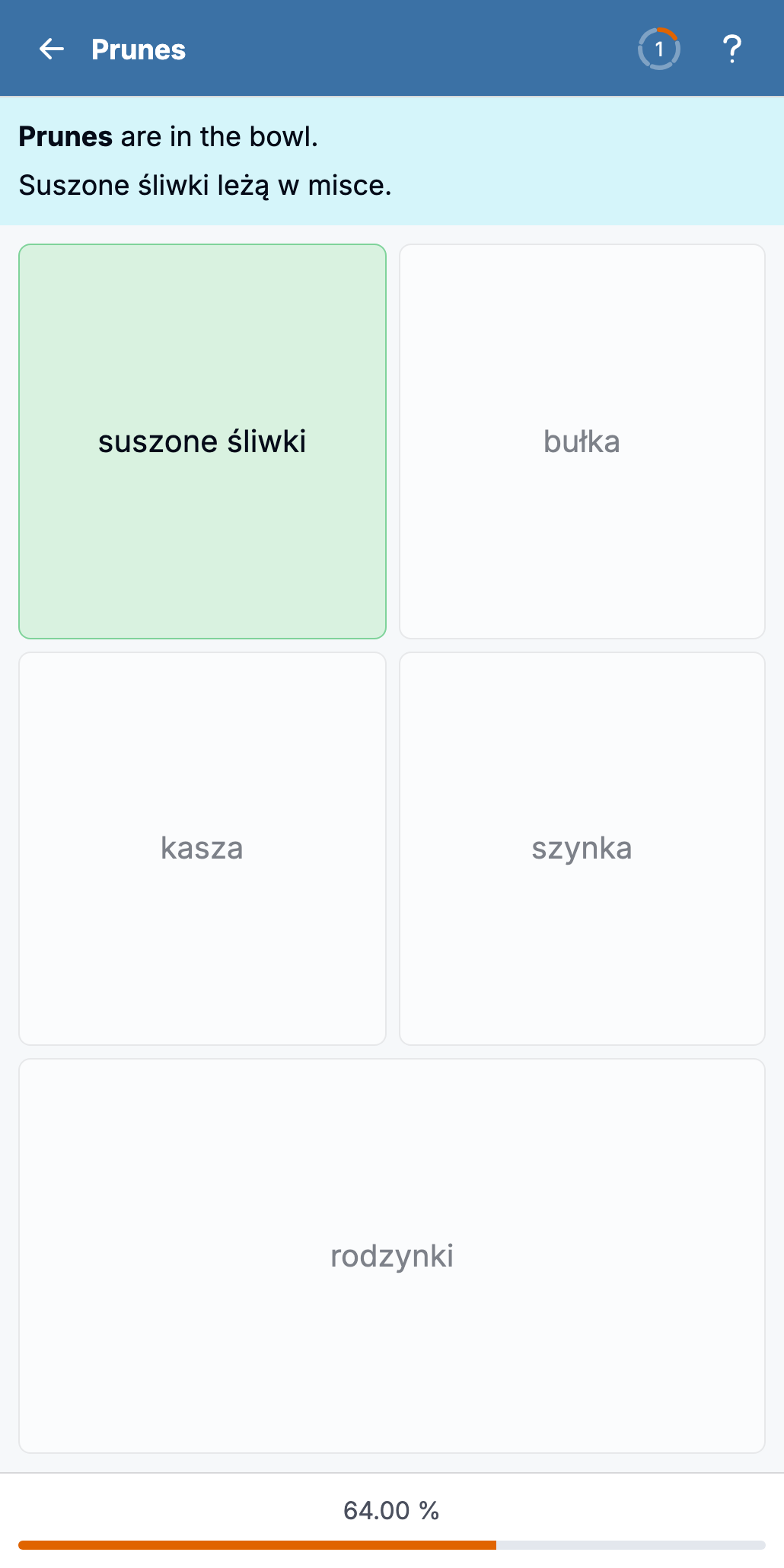
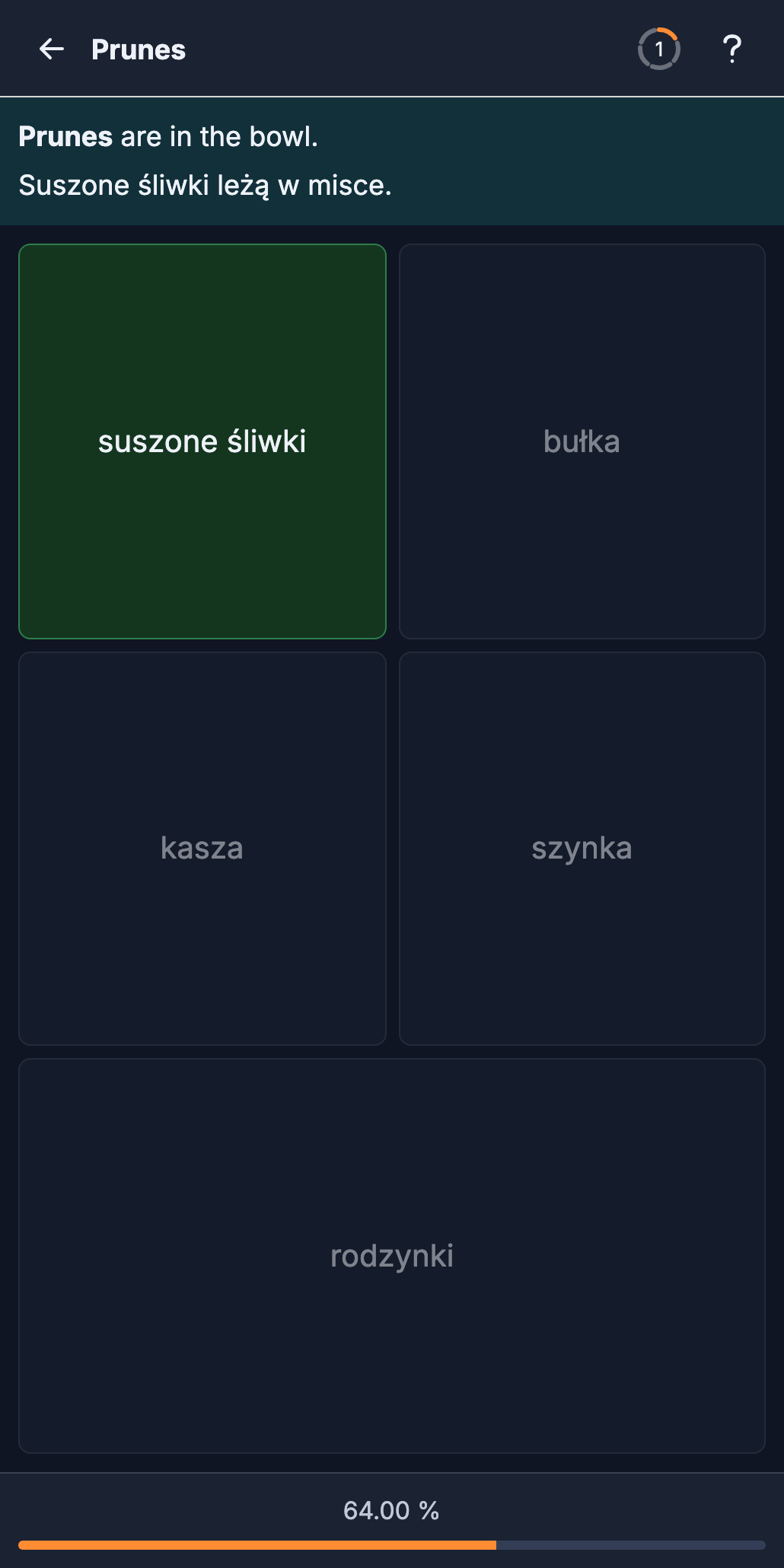
2. Your answer
Pick the word from the options or type it yourself — you set the difficulty in the settings.
3. Scheduled return
The word stays in the set with its translation and comes back later — sooner if it was difficult.
Why it works
The brain quickly forgets what it saw once and keeps what it reviewed at the right moment. SlovoClub tracks that moment for you: what you already know stops getting in the way, and what you find hard comes back more often — until it feels familiar.
App features
- No ads and no pop-ups
- No sign-up — open it and start learning
- Your progress is stored only on your device — and you can carry it over to a new phone
- The dictionary is proofread by hand: translations, forms and examples are checked, not scraped
- Words are sorted by frequency: the ones people actually say come first
What's free and what Premium gives you
All features are open for the first 7 days. After that you can continue for free — 10 new word forms a day — or choose Premium: a 1-month subscription, a 6-month subscription, or a one-time purchase with no auto-renewal.
Almost ready
Help test the Android app
The Android app is in closed testing on Google Play. To reach the public store it needs 12 people who stay in the test for 14 days in a row. If you want early access and can help along the way, join in.
- Join the group first — it unlocks the testing page. Then press “Become a tester” on that page: this is what counts, not joining the group.
- You need a Google account — the same one you will use to install the app from Play.
- Do not press “leave the test” before the period ends: that resets the count and it starts over. Uninstalling the app on its own does not reset it.
- Open it now and then and actually study: Google looks at real activity, not only at the number of participants.